A Critical Moment for the Chocolate Industry
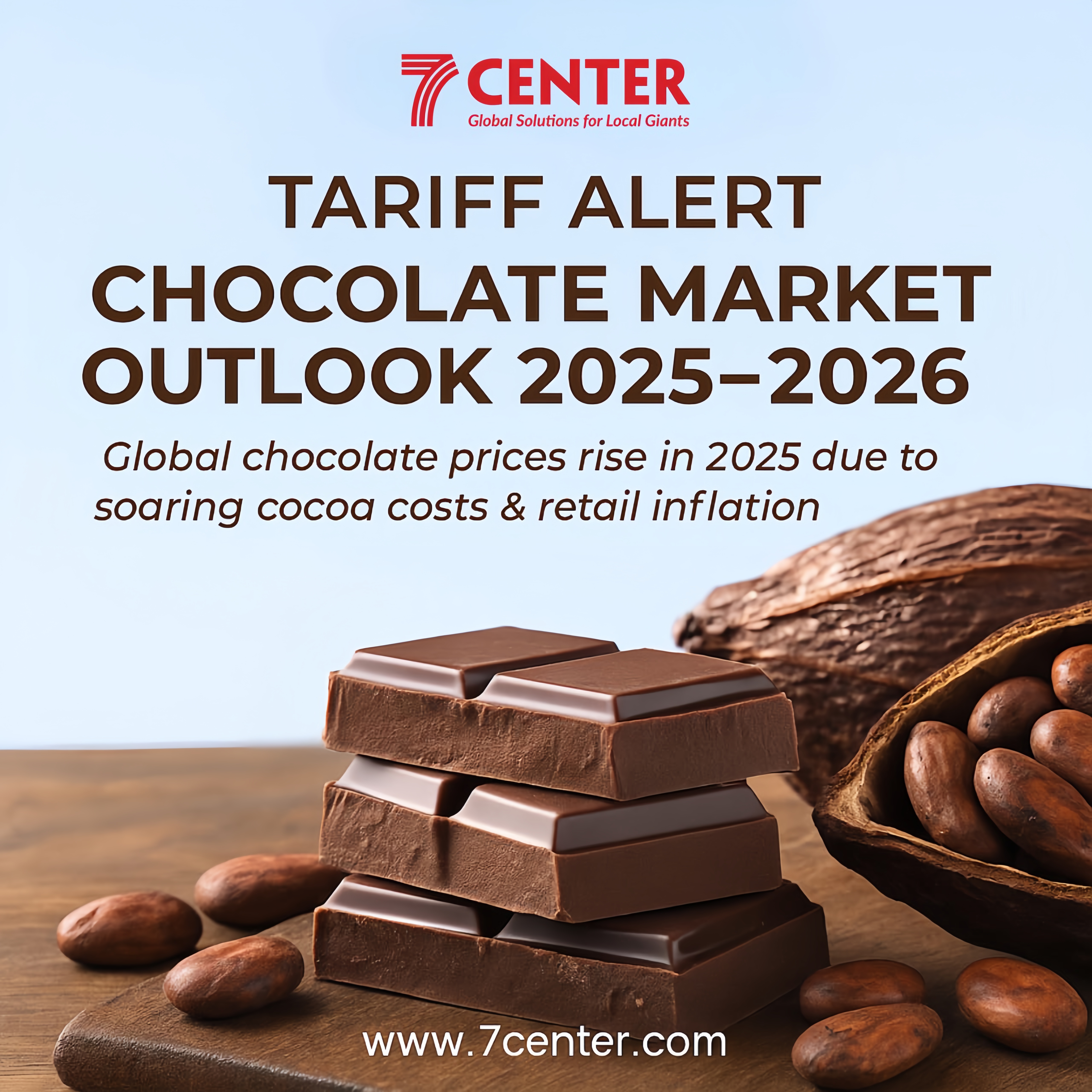
The global chocolate market is entering a high-volatility cycle for 2025–2026 as cocoa prices hit historic highs and major retail chains adjust their pricing strategies. Economic pressures, tariff adjustments, and supply shortages are reshaping costs for manufacturers, distributors, and consumers worldwide.
Recent market signals show that chocolate—once considered a stable commodity segment—is now facing severe price spikes and cost-structure changes across the entire value chain.
This analysis provides essential, up-to-the-minute insights for importers, exporters, SMEs, and supply-chain partners, aligning with 7CENTER’s mission to provide verified global trade intelligence and specialized solutions for turbulent markets.

Why Are Global Chocolate Market Prices Rising in 2025?
Unprecedented Surge in Cocoa Prices
The biggest driver of chocolate inflation is the dramatic increase in cocoa prices. Global cocoa futures have surged, hitting an unprecedented $10,000 per metric ton (hypothetical data) in early 2025—a rise of over 150% year-on-year.
This drastic surge is primarily caused by:
-
Poor Harvests in West Africa: Severe weather (droughts and flooding) in Ivory Coast & Ghana, the world's largest producers.
-
Crop Diseases: The widespread impact of the swollen shoot virus affecting cocoa trees.
-
Reduced Fertilizer Use: High input costs have limited fertilizer application, leading to lower yields
Retail Inflation and Supply-Chain Costs
Retailers in Europe, Asia, and North America report increased operational costs that contribute to final price hikes:
-
Higher energy expenses and packaging material inflation.
-
Rising logistics and labor costs globally.
-
Adjusted import tariffs and stricter quality checks, adding complexity.
Tariff Adjustments and Trade Barriers
Tariff changes for processed chocolate and cocoa derivatives significantly affect import-dependent countries. Key challenges for importers include:
-
Higher import taxes in emerging markets, requiring careful tariff structure analysis.
-
Compliance with sustainability and traceability rules, increasing regulatory overhead.
Outlook 2025–2026: Navigating the Global Chocolate Market Volatility
Continued Price Volatility
Analysts expect global chocolate market prices to remain elevated until late 2026. This volatility necessitates reliable trade advisory and risk mitigation strategies for all industry players.
Shift Toward Premium & Smaller Packaging
Brands are adapting to protect margins and appeal to cost-conscious consumers by:
Rise of Alternative Cocoa Sources
Countries in Asia and Latin America are increasing investments in cocoa production, potentially reducing West Africa’s dominance. Emerging suppliers like Indonesia, Ecuador, and Peru offer new cocoa sourcing opportunities for global buyers seeking diversity and stability.
Impact on Importers, Retailers, and SMEs in the Global Chocolate Market
For Importers and Distributors
They face higher CIF prices, longer contract negotiations, and a crucial need for verified suppliers and expert tariff analysis to maintain profitability. The current instability within the global chocolate market demands importers secure their sourcing earlier than ever.
For SMEs (Small and Medium Enterprises)
SMEs face the most intense pressure due to:
-
Cash-flow strain from rapidly rising ingredient costs, challenging working capital.
-
Maintaining competitiveness against big brands with established supply chains.
7CENTER Note: We offer specialized support for SMEs, providing trade credit solutions and supplier validation services to manage these financial and operational pressures.
Strategic Recommendations: Winning in the Global Chocolate Market
Diversify Cocoa Suppliers (Risk Management)
Work with verified suppliers across multiple regions to minimize dependence on single-source risks and stabilize your supply chain.
Strengthen Long-Term Contracts
Secure fixed-rate agreements early to reduce exposure to ongoing volatility in cocoa prices.
Improve Supply-Chain Transparency (Traceability)
Traceability tools (QR codes, blockchain, verified certificates) help build buyer trust and meet stringent regulatory demands from markets like the EU and US.
Review Tariff Structures Annually (Trade Intelligence)
Tariff changes can significantly impact profit margins. Regular review and optimization are essential for importers and exporters to reduce landed costs.
Consider Smaller Packaging Options
This tactic helps brands maintain a competitive retail price point while preserving necessary profit margins.
Navigating the Changing Global Chocolate Market
The chocolate industry is entering one of its most complex periods in decades. With rising cocoa prices, tariff adjustments, and shifting consumer expectations, businesses need to stay agile and well-informed.
Navigating the turbulent global chocolate market successfully requires leveraging timely trade intelligence and verified supplier networks.
7CENTER continues to support global clients with verified trade intelligence, supplier validation, and market-entry advisory—helping companies operate confidently even in turbulent markets.
Call to Action (CTA)
Facing rising cocoa costs? Looking for verified cocoa or chocolate suppliers outside West Africa?
Need customized global tariff intelligence for 2025–2026?
Contact 7CENTER today for strategic trade solutions and market insights to secure your supply chain.